This guide shows how to build a balanced yoghurt bowl with protein, fibre and fruit, along with simple topping ideas that help keep you full and blood sugars more balanced.

Yoghurt bowls have a reputation for being a healthy breakfast, but if you have ever eaten one and felt hungry an hour later, you already know the truth. Yoghurt on its own, even a good thick Greek one, often does not keep you full. The fix is not eating more; it is building the bowl differently.
A few small changes turn a yoghurt bowl from a snack into a proper breakfast. The right combination of protein, fibre, and fats keeps you satisfied, supports steadier energy through the morning, and still tastes like the kind of breakfast you actually want to eat. This is the approach I use most mornings, and it follows the same logic behind How to Build Balanced Meals across the day.
Here is how to put it together.
The Balanced Yoghurt Bowl Formula
If you want a yoghurt bowl that actually keeps you full, the trick is balance. A bowl built on protein alone leaves you hungry. A bowl built on fruit alone spikes your energy and drops it just as fast. The balance is what makes the difference. Once you have mastered this, you can build one with whatever you have in the kitchen.
This is the formula I use, and it follows the same balanced plate approach I apply to every meal.
At a glance:
- Protein base: around 250 g Greek or natural yoghurt
- Fibre: 1 to 2 tablespoons of seeds, oats, or nuts or a mix
- Carbs: a handful of fresh, frozen, or tinned fruit
- Healthy fats: 1 tablespoon of nuts or extra seeds. Or 1 teaspoon of nut butter

This works well because each part does a different job. The yoghurt gives you protein, the seeds and oats add fibre, the fruit brings flavour and natural sweetness, and a small amount of healthy fat rounds it out and helps everything sit more steadily.
It is the same thinking I use in the balanced meal builder, just applied specifically to a breakfast bowl.
A High Fibre Yoghurt Bowl That Keeps You Full
This is the bowl I come back to most mornings, and I thought it would be useful to share a real-life yoghurt bowl recipe with you so you can see it in action.
It is quick, properly filling, and built from things you probably already have in the kitchen.
- 250 g Greek yoghurt
- 1 tbsp ground flaxseed
- 1 tbsp chia seeds
- 1 tbsp pumpkin seeds
- 50 g tinned peach slices (in juice, drained)
- A handful of raspberries and blueberries

Three different seeds give you three different fibre sources, which is more useful than relying on one (also great for your gut microbiome).
Pairing the fruit with seeds and the protein in the yoghurt slows down how quickly the natural sugars hit your system, and the texture makes the whole thing feel like a proper meal rather than a snack.
If you tend to get peckish mid-morning, this is the kind of bowl that holds you until lunch. It pairs nicely with my approach to balanced snacks too, if you do need something small later.
Why This Type of Breakfast Works
There is a reason this combination feels different from a bowl of yoghurt with a drizzle of honey.
Protein is the most filling of the three macronutrients. A 250 g serving of Greek yoghurt typically gives you around 20 to 25 g of protein, which is a strong start to the day and helps reduce the urge to snack.
Fibre slows digestion, which means the energy from your breakfast is released more steadily rather than in a quick glucose spike.
And combining food groups, rather than eating them in isolation, tends to produce a steadier blood sugar response.
None of this is complicated. It is the same logic that runs through every balanced meal I cook.

Yoghurt Bowl Topping Ideas
This is where yoghurt bowls earn their place. Once you have the formula, the toppings are where you keep things interesting. So get creative and try differnt flavour combinations
Here are a few other yogurt bowl ideas to get you started:
Berry combinations
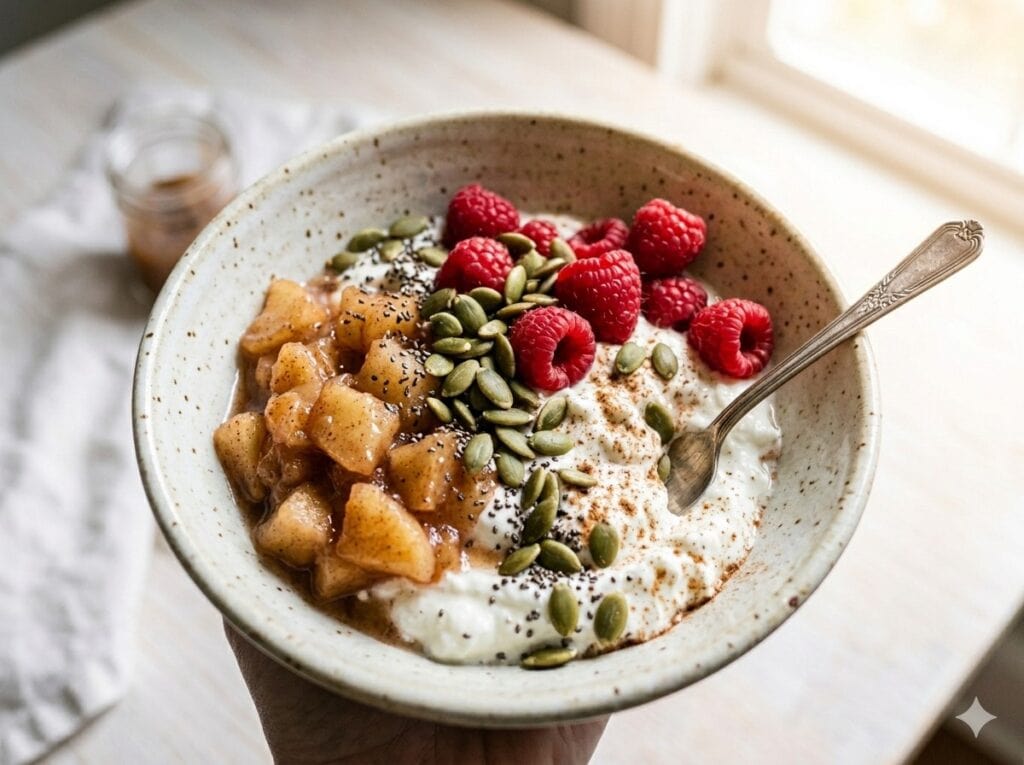
Apple and cinnamon
- Raspberries, blueberries, and chia seeds
- Strawberries, flaxseed, and a few flaked almonds
- Mixed frozen berries (defrosted), pumpkin seeds, and a spoonful of oats
- Grated apple, cinnamon, and walnuts
- Stewed apple, oats, and flaxseed
- Apple slices, almond butter, and a sprinkle of cinnamon
Chocolate options
Tropical options
- Cacao nibs, raspberries, and pumpkin seeds
- A spoon of cocoa powder stirred through, with hazelnuts and banana slices
- Dark chocolate shavings, chia seeds, and strawberries
- Mango, coconut flakes, and chia seeds
- Pineapple, pumpkin seeds, and a few cashews
- Kiwi, flaxseed, and a small handful of granola
High fibre combinations
- Oats, chia, flaxseed, and pear
- Pumpkin seeds, raspberries, and stewed apple
- Almonds, blueberries, and ground flaxseed

Easy Ways to Add More Fibre to Yoghurt
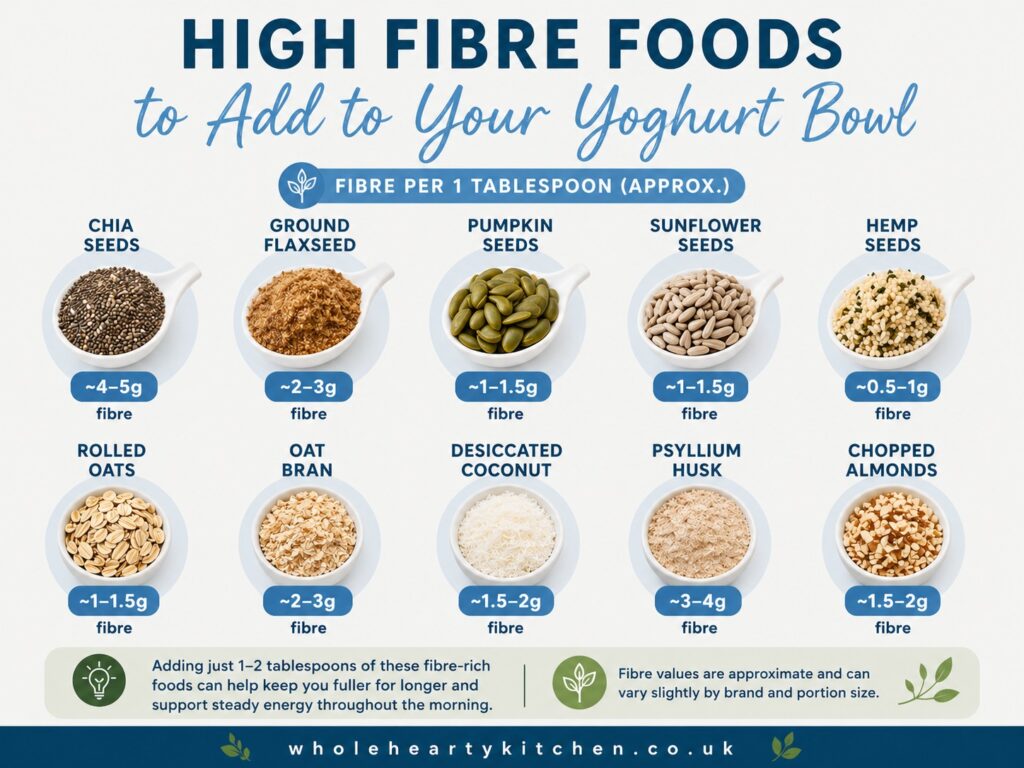
Most people are not eating enough fibre, and a yoghurt bowl is one of the easiest places to add more.
- Chia seeds: around 5 g of fibre per tablespoon, plus they thicken the bowl nicely if left for a few minutes.
- Ground flaxseed: around 2 g of fibre per tablespoon. Mild in flavour and easy to stir through. Ground rather than whole, so your body can actually use it.
- Oats: around 1 g of fibre per tablespoon. Raw or lightly soaked work well, adding bulk and slow-release carbs.
- Nuts: roughly 1 g of fibre per tablespoon, depending on the variety. Almonds, walnuts, and hazelnuts all bring fibre alongside healthy fats.
A mix of two or three of these is more useful than relying on one, and it adds variety in texture too.

How to Build a Yoghurt Bowl Using What You Have
You do not need a specific recipe to make a good yoghurt bowl. Once the formula sits in your head, you can build one from what is already in the kitchen.
Open the cupboard. Any seeds? Any nuts? A bit of leftover granola? That is your fibre and fat sorted.
Open the fridge or freezer. Fresh berries, frozen mango, an apple, a tin of fruit in juice? That is your fruit. Add it all to a bowl of yoghurt and you have breakfast.
The mix and match approach is what makes this sustainable. Pantry staples like flaxseed, chia, and oats keep for ages, frozen fruit is always there, and a tub of Greek yoghurt is rarely far away.
💡A simple way to think about it: one protein, one or two fibres, one fruit, one fat. Anything beyond that is a bonus.
Frequently Asked Questions
What can you put in a yoghurt bowl?
Anything that adds protein, fibre, fruit, or healthy fats. The most useful additions are seeds (chia, flax, pumpkin), nuts, oats, fresh or frozen fruit, and small amounts of nut butter or coconut. Avoid loading up only on sweet toppings like honey or sugary granola if you want the bowl to keep you full.
Are yoghurt bowls healthy?
They can be, depending on what goes in. A yoghurt bowl built around natural or Greek yoghurt, fruit, seeds, and nuts is a strong, balanced breakfast. One built around flavoured yoghurt and sugary granola is closer to a dessert. The base ingredients matter more than the label.
What is the best yoghurt for blood sugar balance?
Plain Greek or natural yoghurt is the most useful starting point. It is high in protein, low in added sugar, and works with whatever toppings you choose. Flavoured yoghurts often contain added sugar, which changes the picture quickly. If you prefer dairy-free, look for a coconut or soya yoghurt with no added sugar and check the protein content.
What toppings work best for yoghurt bowls?
A combination of fibre and fats works best. Seeds, nuts, fresh or frozen berries, stewed apple, and a sprinkle of oats all hold up well. Toppings that are mostly sugar (honey, syrups, sweetened granola) are fine occasionally but will not keep you as full.
A Quick Note on Blood Sugar Balance
Pairing yoghurt with fibre and fats can help slow digestion and support steadier energy compared to yoghurt with fruit on its own. It is a small shift that makes a noticeable difference, especially if you tend to feel hungry an hour or two after breakfast.
Build Your Breakfast Around What Works for You
A yoghurt bowl is one of the easiest breakfasts to make work for you. Once the formula is in your head, you can adapt it to whatever you have, whatever you fancy, and whatever fits your morning. The point is not to follow a recipe to the letter, it is to build something that actually keeps you going.
If you want to apply the same approach to the rest of your meals, start with my guide on how to build balanced meals, or have a look at the Balanced Meal Builder for a practical reference you can keep coming back to.




Leave a Reply