These cinnamon oat cookies are one of those simple, comforting bakes we all love. Soft centred, gently spiced and made with oat and almond flour, they’re naturally gluten free and sugar free for a more balanced, everyday treat.

I first came across snickerdoodle cookies on a trip to America, and they quickly became one of those bakes I couldn’t stop thinking about. If you’ve not tried them before, they’re soft, cinnamon-coated cookies with that warm, cosy flavour that feels somewhere between a biscuit and a cake.
It was that cinnamon warmth I wanted to bring into my own kitchen, but in a way that worked better for everyday baking for blood sugars. If you’ve tried my simple sugar free oat biscuits, this recipe sits in that same everyday baking space, just with a little extra warmth from the cinnamon. After a few test batches (and lots of cookie tasting!), I’m so pleased with how these have turned out.
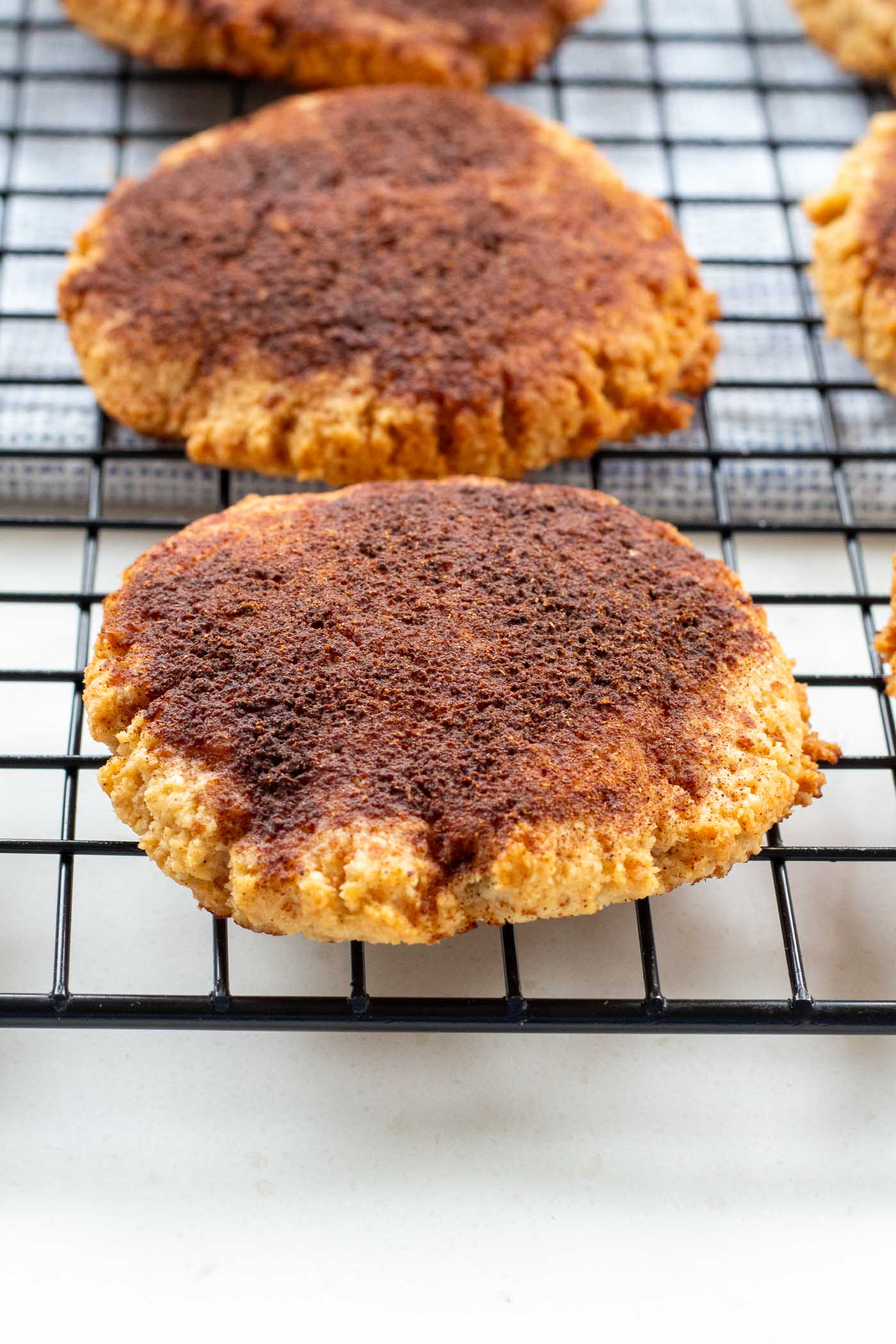
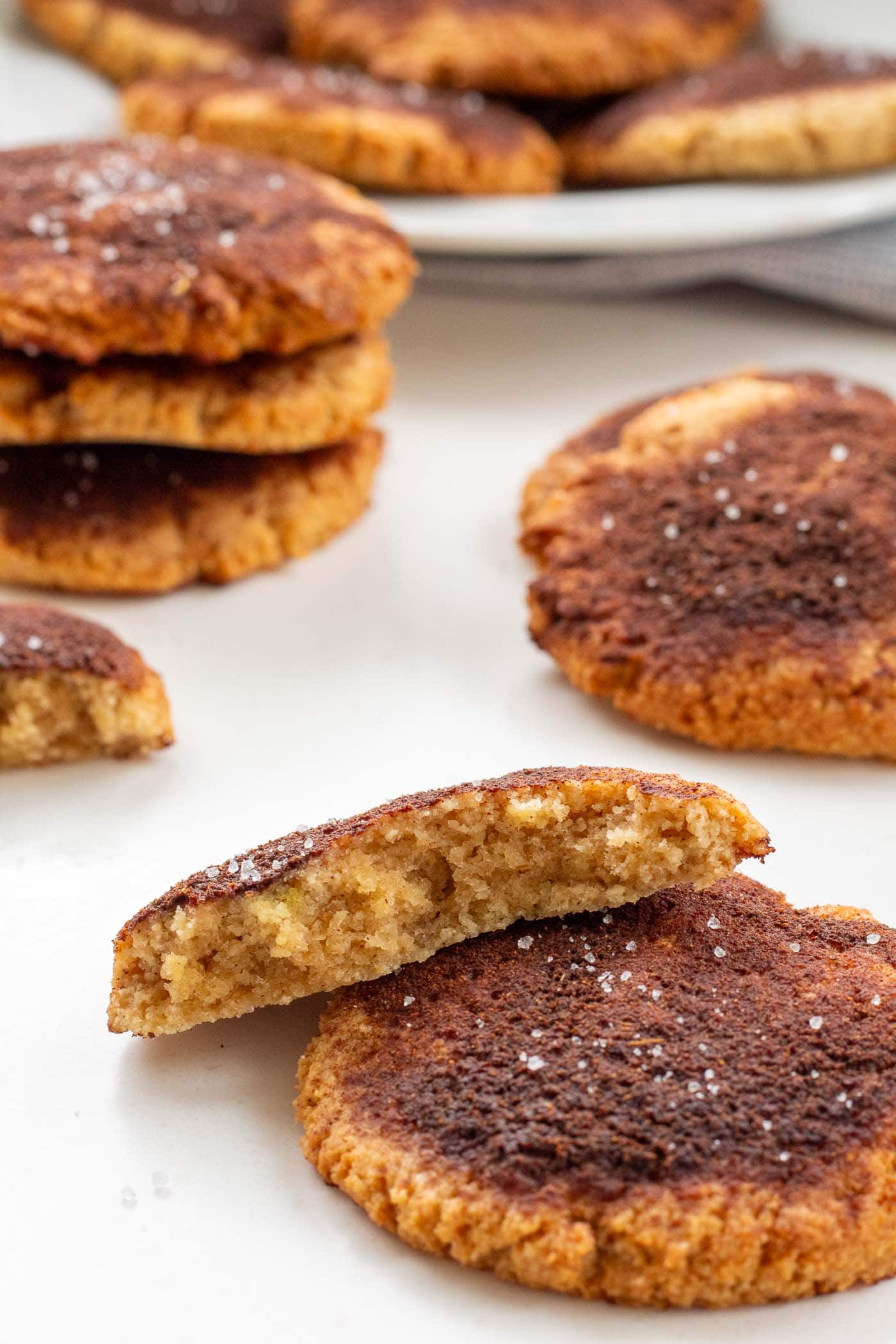
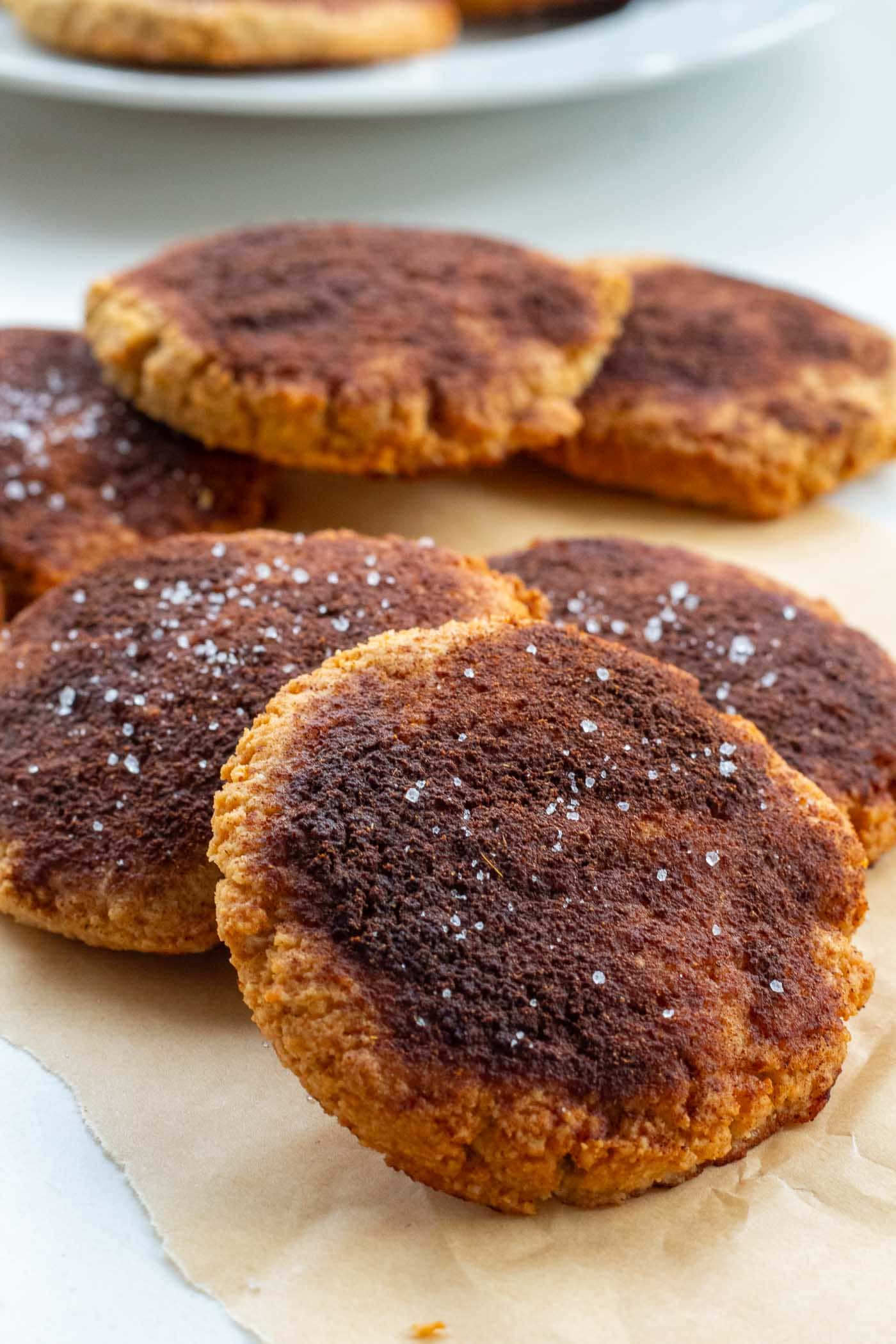
These cinnamon oat cookies are soft in the middle, gently spiced and finished with that classic cinnamon coating . They’re the kind of biscuit that works just as well with a cup of tea as it does as a simple, more balanced treat.

Why you’ll love these snickerdoodle‑style cookies
- Diabetes-friendly – sweetened with xylitol instead of refined sugar, these cookies are a delicious treat that won’t cause the same sharp spikes in blood sugar.
- Gluten-free flours – the combination of almond flour and oat flour makes them naturally gluten free while also adding fibre, healthy fats and protein.
- Perfect texture – crisp around the edges but still soft and chewy in the middle, just like a classic snickerdoodle.
- Full of flavour – with cinnamon inside the dough and a cinnamon coating, every bite is warm and comforting.
- Simple ingredients – no complicated swaps, just everyday baking cupboard staples with a few nourishing twists.
- Great for sharing – ideal with a cup of tea or coffee, as an after-school treat, or to keep in the freezer for when you need a quick sweet snack.

Ingredients breakdown
Almond flour (ground almonds) – Brings healthy fats and some protein, which help with satiety and a minimal impact on blood glucose.
Oat flour (use certified gluten‑free oats if needed) – A good source of fibre, including beta‑glucan. Oats also contribute some resistant starch, which can be helpful for blood sugar balance.
🔗Read more about Oats and Diabetes Management in this article
Coconut flour – Another great low-carb flour. Just a small amount adds structure to these cookies as it absorbs moisture and helps the dough hold shape.
Xylitol – A natural sugar alternative with a low impact on blood glucose, giving sweetness without sharp spikes. Note: Keep away from pets, as xylitol is highly toxic to dogs.
🔗 Read More about Sugar Substitutes for Type 1 Diabetes in this helpful guide
Cinnamon – For that comforting snickerdoodle flavour.
Cream of tartar – The signature tang of a snickerdoodle and that soft‑chewy texture.
Bicarbonate of soda – Works with cream of tartar to lift and spread the cookies slightly.
Butter, egg, vanilla essence, and a pinch of salt – Classic baking essentials for flavour and tenderness.
How to make healthy cinnamon OAT cookies
These cookies are really simple to bring together, and you don’t need any special equipment – just a couple of bowls and a baking tray. Here’s how to do it:
Preheat the oven – Set your oven to 180°C fan / 200°C / 375°F and line a baking tray with parchment paper.
Mix the coating – In a small bowl, stir together xylitol and ground cinnamon. This is what gives the cookies their signature warm, spiced finish.
Combine the dry ingredients – In a medium bowl, whisk together the ground almonds, oat flour, coconut flour, baking soda, cream of tartar, ground cinnamon and salt.
Beat the wet ingredients – In a separate bowl, gently melt the butter in the microwave or in a pan on the stove. Add the xylitol and vanilla extract and mix. Finally, whisk in the egg until you have a light, smooth batter.
Bring it all together – Tip the wet mixture into the dry ingredients and stir until a soft dough forms.
Shape the cookies – Scoop a tablespoon of dough (I find a cookie scoop really helpful for equal balls), roll it into a ball, then coat it in the cinnamon-xylitol mixture. Place on your baking tray and press down gently with the palm of your hand or the bottom of a glass. Repeat with the remaining dough and sprinkle over any leftover cinnamon coating
Bake to perfection – Bake in the preheated oven for 13–15 minutes, until the cookies are lightly golden around the edges and still soft in the centre.
Cool and enjoy – Leave the cookies to cool on the tray for 5 minutes before transferring them to a wire rack. They’ll firm up as they cool, but stay soft and chewy in the middle.
💡Tip – Don’t overbake the cookies as they continue to set as they cool.

Tips for the Best Cinnamon Cookies
- Don’t skip the cream of tartar – It’s what gives these cookies that classic chewy texture with just a little tang, helping them stand out from a regular cinnamon biscuit.
- Use room temperature butter and egg – This makes it easier to cream everything together smoothly and avoids a greasy dough.
- Keep an eye on baking time – The cookies should be just turning golden at the edges but still soft in the centre when you take them out. They will continue to firm up as they cool. Overbaking will make them dry rather than chewy.
- Cinnamon in the dough = extra flavour – Rolling in the cinnamon-xylitol mix gives that signature coating, but I also add a little cinnamon directly to the cookie dough for a deeper, cosier flavour.
- Make them ahead – These cookies keep well in an airtight container for up to 4 days, and you can also freeze the dough balls before baking.
- Adjust the sweetness – Everyone’s taste buds are a little different when it comes to sugar substitutes. If you prefer a sweeter cookie, you can increase the xylitol slightly – but be careful, too much can affect the texture.

Diabetes note
These gluten-free cinnamon cookies use almond flour and oat flour in place of white flour, bringing fibre and healthy fats that support steadier blood sugars. Xylitol keeps sweetness without the sharp rise you’d expect from refined sugar. Oats offer beta‑glucan fibre, which may further help with glucose management.
If you’re building snacks with balance in mind, pair a cookie with a source of protein like Greek yoghurt, a small piece of cheese, or a few nuts.
- Read more about How to build balanced snacks for diabetes
- Learn about low GI flours, glycemic index and blood sugar
- Explore sugar alternatives for baking
Type 1 Carb Counting
The estimated carbohydrate content for one cinnamon cookie is based on the countable ingredients that contribute to the total carbs. Here’s the breakdown:
- 80g of Oat Flour = 56g of carbs
Divide this by 12 – 56/12 = 5g of carbs per Cookie
Learn More About – Type 1 Diabetes Carb Counting
Please note this carb count per portion is based on the standard ingredients listed above and may differ depending on what you use and how much you choose to eat.

Did you try this recipe?
I’d love to hear how it went! Leave a star rating or a quick comment below. Your feedback means the world and helps others find the recipe too.
More healthy cookie inspiration
- Almond Flour Oatmeal Chocolate Chip Cookies
- Coconut Oat Cookies
- Low Sugar Diabetic Oatmeal Cookies
- Best Low Sugar Cookie Recipes – Diabetes Friendly Roundup


Healthy Cinnamon OAT Cookies (suagr Free & Gluten Free)
Soft and slighly crispy, these gluten-free and sugar-free cinnamon cookies are diabetic-friendly and perfect for a wholesome treat.
12
servings10
minutes15
minutes25
minutesIngredients
120 g 1 cup ground almonds
80 g 2/3 cup oat flour
20 g 1/6 cup coconut flour
1/4 tsp 1/4 tsp bicarb of soda
1/2 tsp 1/2 tsp cream of tartar
1/4 tsp 1/4 tsp fine sea salt
1/2 tsp 1/2 tsp ground cinnamon
130 g 4 3/5 oz unsalted butter, melted
50 g 1/5 cup xylitol
1 large 1 large egg
1 tsp 1 tsp vanilla extract
- For The Cinnamon Coating
25 g 1/8 cup xylitol
1 1/2 tsp 1 1/2 tsp ground cinnamon
Directions
- Preheat your oven to 180°C fan / 200°C / 375°F and line 2 baking trays with parchment paper.
- In a small bowl, stir together xylitol and ground cinnamon. This is what gives the cookies their signature warm, spiced finish.
- In a large bowl, whisk together the ground almonds, oat flour, coconut flour, baking soda, cream of tartar, ground cinnamon and salt.
- In a separate bowl, gently melt the butter in the microwave or in a pan on the stove. Add the xylitol and vanilla extract and mix. Finally, whisk in the egg until you have a light, smooth batter
- Bring it all together by combining the wet mixture with the dry ingredients and stir until a soft dough forms.
- Scoop a tablespoon of dough (I find a cookie scoop really helpful for equal balls), roll it into a ball, then coat it in the cinnamon-xylitol mixture.
Place on your baking tray and press down gently with the palm of your hand or the bottom of a glass. Repeat with the remaining dough and sprinkle over any leftover cinnamon coating - Bake in the preheated oven for 13–15 minutes, until the cookies are lightly golden around the edges and still soft in the centre.
- Leave the cookies to cool on the tray for 5 – 10 minutes before transferring them to a wire rack. They’ll firm up as they cool, but stay soft and chewy in the middle.


Tips and Notes
- Storage – Keep in an airtight container for 3–4 days at room temperature or freeze for up to 2 months.
- Diabetes Note – These healthy cinnamon oat cookies are made with blood sugar–friendly ingredients like almond and oat flour and xylitol, making them a delicious treat that fits into mindful diabetes management.
- The nutritional information provided is based on the ingredients I use and should be used as a guideline only. The carbohydrate content may vary depending on the specific brands and measurements you use. If you are counting carbs for insulin dosing, always calculate the amount based on your own ingredients and portion sizes to ensure accuracy.
Nutrition Facts
- Total number of serves: 12
- Calories: 200kcal
- Fat: 15g
- Saturated Fat: 6g
- Carbohydrates: 11g
- Fiber: 3g
- Protein: 4g
Frequently Asked Questions
Can I make these cookies dairy free?
Yes! Simply swap the butter for a good dairy-free block alternative (not spread, as it has too much water). This will give a similar texture and still keep them soft and chewy.
Can I use a different sweetener instead of xylitol?
Yes, but results will vary. I tested and recommend xylitol as it gives the closest 1:1 sweetness to sugar, a soft texture, and a balanced blood-sugar response.
Do I need cream of tartar?
Yes, if you want that authentic chewy texture! Without it, they’ll taste more like traditional cinnamon biscuits rather than soft cookies.





Leave a Reply