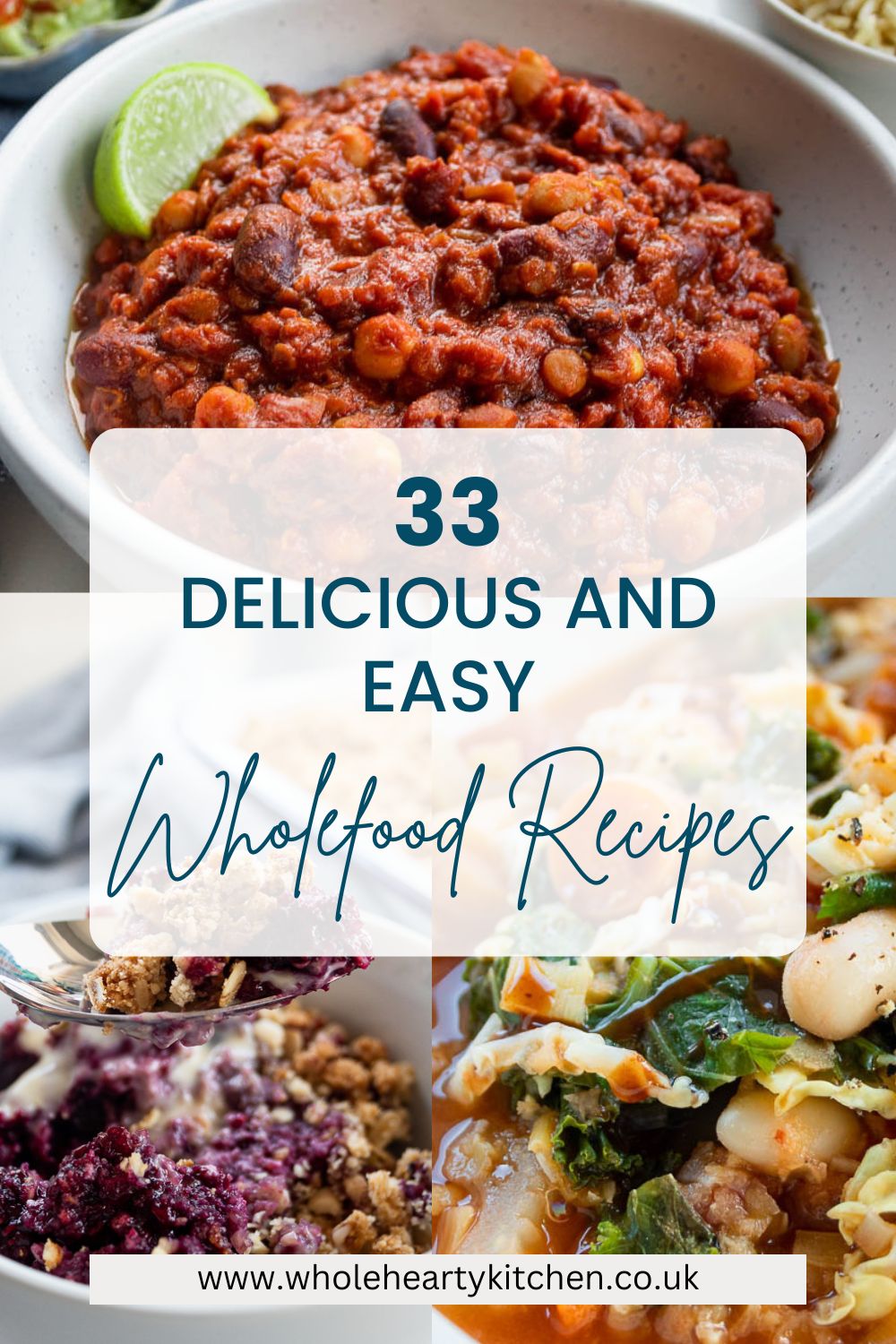
Looking for easy whole food recipes that are practical for real life? This collection of 33 plant-rich meals is built around simple, minimally processed ingredients that help you eat more fibre, feel fuller for longer, and support steady blood sugar levels without cooking separate meals.
What are Whole Foods?
Whole foods are ingredients that are as close as possible to their natural state. They are minimally processed, contain no unnecessary additives, and are naturally rich in fibre, vitamins and minerals. Examples include vegetables, fruit, whole grains, legumes, nuts, seeds, eggs, fish and fresh meat.
Examples of whole foods include:
Fruit and Vegetables
Fresh, frozen, canned, or dried, in all varieties and colours.
Whole grains
These are grains that have not had their outer husk removed. Some examples are wholewheat flour, wholewheat bread and pasta, brown rice, rolled oats, quinoa, bulgar, freekeh, buckwheat
Nuts and Seeds
All types and varieties in their whole form or as spreads (without anything added). Some examples are cashews, hazelnuts, almonds, walnuts, flax, poppy, hemp, sesame, sunflower, and chia seeds.
Legumes
These are all types of beans, lentils and peas that are dried, tinned or in ready-prepared packets. Some examples are chickpeas, kidney, cannellini, pinto, black, butter beans, tofu is derived from soybeans, and all varieties of lentils, peanuts and peas
Meat, Fish and Eggs
All types, including fresh, frozen or canned fish, poultry, eggs, and lean cuts of meat.
These are the exact foods I use when building balanced plates at home. If you want a simple visual guide to turn these ingredients into meals you can repeat every week, download the free Balanced Blood Sugar Meal Builder.
Why whole foods support more stable blood sugar
Meals built from whole foods digest more slowly and give a steadier release of energy. In our day-to-day life, that has meant blood sugars are far more predictable and much easier to match with insulin, removing the need to second-guess every plate.
This is because whole foods are:
- Higher in fibre which slows digestion
- More predictable carb absorption
- Naturally more filling
- Easier to build balanced meals
🔗 You can read more about The Benefits of a Whole Food Diet and Diabetes in this article
How to get more plants into your diet
Eating more plants does not mean changing everything about the way you cook. In our kitchen, it has come from small, repeatable changes that fit into meals we were already making.
Those simple shifts have made a real difference to how filling our meals are and how steady blood sugars feel afterwards.
Here are some realistic ways to make that happen:
- Start small and build up – Add an extra portion of vegetables to a meal you already eat regularly, or replace half the meat in a familiar recipe with lentils or beans. You still get the same meal, just with more fibre and variety.
- Build in a regular plant-based day – A meat-free night each week creates a simple routine and a chance to try new flavours without overthinking every meal.
- Think in colour, not rules – Choosing a mix of different coloured vegetables across the week is an easy way to increase the range of nutrients on your plate.
- Use legumes as everyday ingredients – Chickpeas, lentils and beans are affordable, filling and work in everything from salads to pasta sauces and soups.
- Switch your grains gradually – Swap white rice for brown rice, or try quinoa, bulgur, or buckwheat. Whole grains add more fibre and help meals keep you satisfied for longer.
- Be selective with meat alternatives – Foods like tofu, tempeh or plant-based sausages can be useful, but it is worth reading the labels and using them alongside whole food options rather than relying on them.
- Make plants the easy snack – Keep fruit, chopped vegetables or a handful of nuts where you can see them so they become the quickest option..
- Add a simple side salad – A small salad alongside lunch or dinner is one of the most reliable ways to increase fibre without changing the main meal.
💡 For more step-by-step ideas that work in real life, see 21 Simple Ways to Eat More Plants Starting Now, where I share the exact swaps and habits we use at home.

Whole Food Recipes Packed with Plant-Based Goodness
These 33 easy whole food recipes make it simple to eat more plants while enjoying balanced, filling meals the whole family can share. Built around vegetables, legumes, whole grains, nuts and seeds, each recipe uses minimally processed ingredients that naturally provide more fibre, vitamins and long-lasting energy.
They’re the kinds of meals that support steady blood sugar, reduce the need for separate cooking, and bring colour, texture and flavour to your plate without adding extra complexity. All recipes in this collection are vegetarian and plant-focused, so you can return to them on busy midweek evenings as well as slower, more relaxed weekends.
Hearty Vegetarian Whole Food Mains for Balanced Blood Sugar
These plant-based vegetarian main meals are built around whole food ingredients like legumes, vegetables and whole grains to create filling, fibre-rich dinners that keep you satisfied for longer. From veggie-packed sauces to simple meat-free family favourites, these recipes make it easy to eat more plants while keeping your plate balanced and full of flavour.

Blood Sugar Friendly Lentil and Bean Chilli
Cooks in 55 minutesDifficulty: EasyView RecipeThis protein and fibre packed vegan lentil and bean chilli is loaded with delicious flavours for an easy mid-week meal.
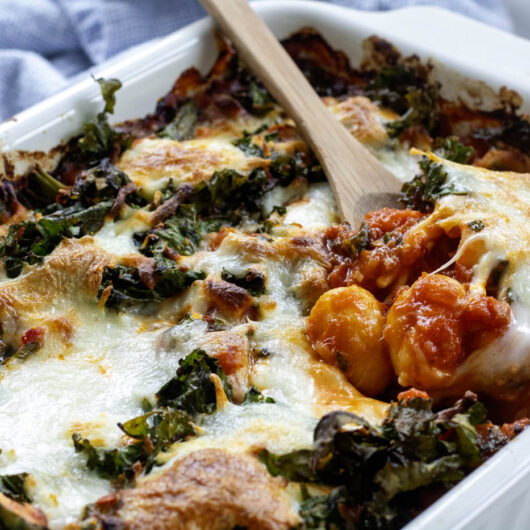
Crispy Kale Gnocchi Bake with Tomatoes
Cooks in 50 minutesDifficulty: EasyView RecipeEnjoy a comforting vegetarian baked gnocchi with kale and tomatoes. An easy and healthy weeknight meal that’s delicious and nutritious!
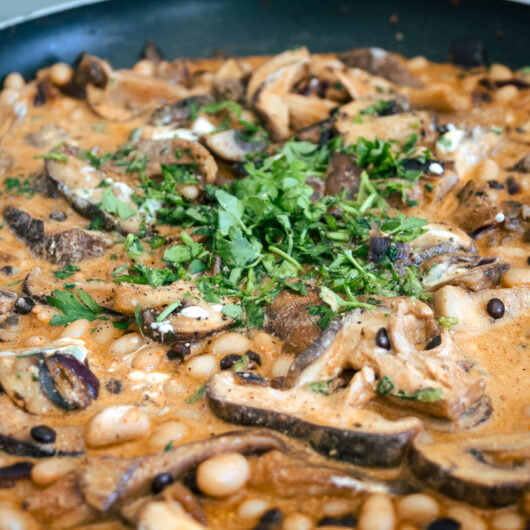

Creamy Mushroom & Lentil Stroganoff
Cooks in 25 minutesDifficulty: EasyView RecipeA cosy, one-pan mushroom and lentil stroganoff that’s ready in around 30 minutes. The perfect quick and easy midweek meal!


Vegetarian Sausage and Butternut Squash Traybake
Cooks in 50 minutesDifficulty: EasyView RecipeThis flavoursome veggie sausage traybake with rich seasonal flavours makes a perfect heartwarming midweek dinner


Easy Vegan Butterbean Stew with Harissa
Cooks in 35 minutesDifficulty: Very EasyView RecipeEnjoy a hearty nutritious midweek meal with this Easy Vegan Butter Bean Stew. A one-pan wonder, subtly spicy, and brimming with goodness.

Harissa Veggie Sausage and Chickpea Traybake
Cooks in 35 minutesDifficulty: EasyView RecipeA simple one-pan dinner where everything roasts together to create a balanced, high-fibre traybake that’s full of flavour and ready with very little effort.

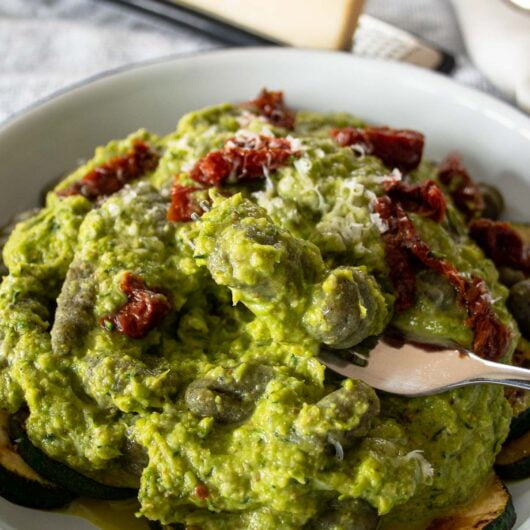
Super Green Pesto Gnocchi
Cooks in 15 minutesDifficulty: Very EasyView RecipeQuick, healthy, and packed with flavour, this green pesto gnocchi recipe is the perfect 15-minute dinner with a tasty homemade green sauce.


Butternut Squash and Tomato Pasta Sauce
Cooks in 40 minutesDifficulty: Very EasyView RecipeButternut Squash and Tomato Pasta Sauce—rich in flavour, nutrients, low-glyceamic, and a wholesome addition to your meals.

Aubergine and Feta Bake
Cooks in 45 minutesDifficulty: EasyView RecipeEnjoy a fibre-rich aubergine feta and tomato bake, full of flavour and perfect as a vegetarian main or simple side.

Vegetarian Cottage Pie with Sweet Potato
Cooks in 70 minutesDifficulty: EasyView RecipeIf you are looking for an all-in-one warm and comforting dinner, then this vegetarian cottage pie with sweet potato is definitely the recipe for you!


Easy Chickpea Curry with Coconut Milk
Cooks in 25 minutesDifficulty: Very EasyView RecipeThis easy rich chickpea curry with coconut milk makes a flavourful meal or side dish. Great when you’re looking for a healthy dish in a hurry!

Vegetarian GLUTEN FREE Moussaka
Cooks in 120 minutesDifficulty: EasyView RecipeHealthy Vegetarian Gluten Free Moussaka! Diabetic-friendly lentils replace meat for a delicious twist on the classic!
Fresh Whole Food Salads and Healthy Sides for Balanced Meals
These whole food salads and plant-rich side dishes are one of the simplest ways to add more fibre, colour and nutrients to your plate. Built with vegetables, fruit, legumes, nuts and seeds, they bring texture, flavour and slow-release energy to any meal while helping to support steady blood sugar levels.
Adding a nourishing salad or vegetable-based side is also an easy way to complete a balanced plate. They naturally increase the fibre content of your meal, make portions more satisfying, and help turn everyday mains into more filling, well-rounded dinners without extra effort.
From quick lunch salads to vibrant sides for family meals, these recipes make it easier to eat more plants using simple, minimally processed ingredients you can rely on throughout the week.

Roasted Aubergine and Lentil Salad
Cooks in 55 minutesDifficulty: EasyView RecipeA fibre rich Mediterranean-inspired roasted aubergine and lentil salad with goat’s cheese for a healthy, satisfying meal or side dish.
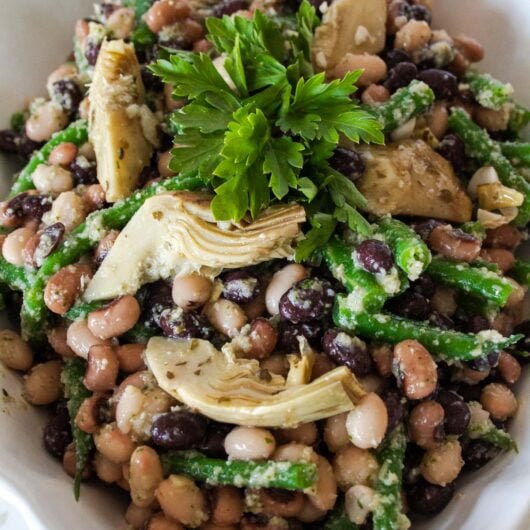
Bean and Marinated Artichoke Salad
Difficulty: EasyView RecipeThis blood sugar friendly bean and marinated artichoke salad combines protein and fibre-packed beans with a unique tangy artichoke dressing. An easy way to add more plants to your diet

Sriracha Rice Salad
Cooks in 40 minutesDifficulty: EasyView RecipeSpicy Sriracha rice salad with wholegrain basmati rice, vibrant veggies, and a creamy tahini dressing, perfect for any meal

Chickpea and halloumi salad
Cooks in 20 minutesDifficulty: EasyView RecipeFresh, vibrant and blood sugar-friendly, this easy halloumi and chickpea salad is packed with protein, fibre, and Mediterranean flavour.

Crunchy Edamame Salad
Cooks in 15 minutesDifficulty: Very EasyView RecipeAdd some excitement to your meals with this tantalisingly crunchy edamame salad recipe

Easy Herby Green Bean Salad
Cooks in 15 minutesDifficulty: Very EasyView RecipeA fresh green bean salad with a herby lemon dressing. It’s light, nutrient-packed, low-carb and can be served hot or cold

Healthy Homemade Baked Beans
Cooks in 35 minutesDifficulty: Very EasyView RecipeHomemade baked beans with no added sugar, that are balanced and blood‑sugar friendly, higher in fibre and plant protein, ready in under 30 minutes and ideal for batch cooking


Roasted Pesto Veggies
Cooks in 25 minutesDifficulty: EasyView RecipeBoost your health and taste buds with this delicious pesto roasted vegetable recipe. Low-carb, easy to follow, packed with nutrients, perfect for busy lives.


Warm Quinoa Roasted Vegetable Salad With Homemade Pesto
Cooks in 35 minutesDifficulty: EasyView RecipeA cosy and comforting side, perfect for lunch or dinner. Packed with protein, fibre, and flavour it’s a deliciously balanced winter meal.

Brown Rice and Quinoa Salad with Herbs
Cooks in 15 minutesDifficulty: Very EasyView RecipeThis Brown Rice and Quinoa Salad is packed with protein, fibre, and fresh flavours. It’s a perfect side dish to a healthy, satisfying meal.

Mediterranean Roasted Aubergine, Pepper & Green Bean Salad
Cooks in 60 minutesDifficulty: EasyView RecipeA light and vibrant roasted aubergine salad perfect for summer lunches or as a colourful side dish.

Easy & Healthy Roasted Bombay Potatoes
Cooks in 35 minutesDifficulty: Very EasyView RecipeA Healthy & Easy Roasted Bombay Potatoes recipe! These delicious one-pan wonders are full of whole-food goodness.

Smoked Paprika Sweet Potatoes
Cooks in 45 minutesDifficulty: Very EasyView RecipeElevate your meals with the goodness of smoked paprika sweet potatoes. A healthy and diabetes-friendly option for managing blood sugar levels.
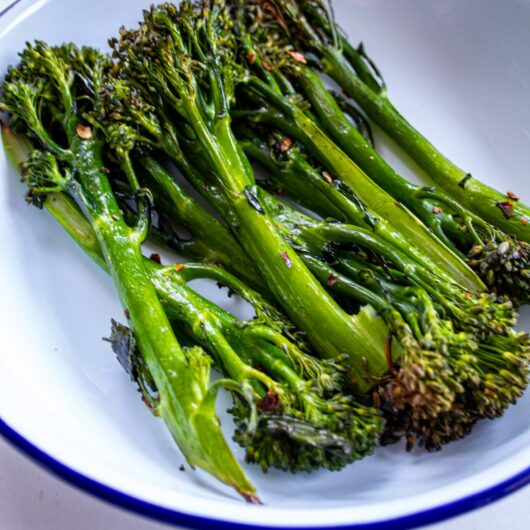
Oven Roasted Tenderstem Broccoli
Cooks in 20 minutesDifficulty: Very EasyView RecipeDiscover a new way to enjoy your greens with this flavorful and satisfying oven roasted tenderstem broccoli recipe!

Indian Spiced Roast Vegetables
Cooks in 70 minutesDifficulty: Very EasyView RecipeThese easy & full of flavour Indian spiced roasted vegetables make a healthy side dish perfect for curries, salads, or vegetarian meals.

Leek and Butter Bean Dish
Cooks in 15 minutesDifficulty: Very EasyView RecipeThis creamy leek and butter bean dish is easy to make and a true crowd-pleaser!

Easy Roasted Beetroot and lentil
Cooks in 60 minutesDifficulty: EasyView RecipeA brilliantly versatile & easy roasted beetroot and lentil recipe. Packed with flavour and low-GI goodness, this dish is a tasty addition to your meals


Zesty Pan Fried Courgettes
Cooks in 10 minutesDifficulty: Very EasyView RecipeTransform soggy courgettes into crispy perfection in just 10 minutes. Low-carb, blood sugar friendly, and bursting with flavour. Family-approved!

Comforting Whole Food Soups for Easy, Balanced Meals
Whole food soup recipes are one of the easiest ways to eat more plants while keeping meals warm, filling and practical for everyday life. Made with vegetables, legumes and whole grains, these high-fibre soups provide slow-release energy, support steady blood sugar levels and help you stay satisfied for longer.
They are also ideal for batch cooking. A single pot can cover lunches, quick midweek dinners or freezer meals, making it much easier to build balanced plates even on busy days. With simple, minimally processed ingredients and plenty of flavour, these soups are a reliable staple in a plant-rich meal routine.

High Protien Tomato Soup
Cooks in 35 minutesDifficulty: EasyView RecipeA super nourishing version of the classic cream of tomato soup
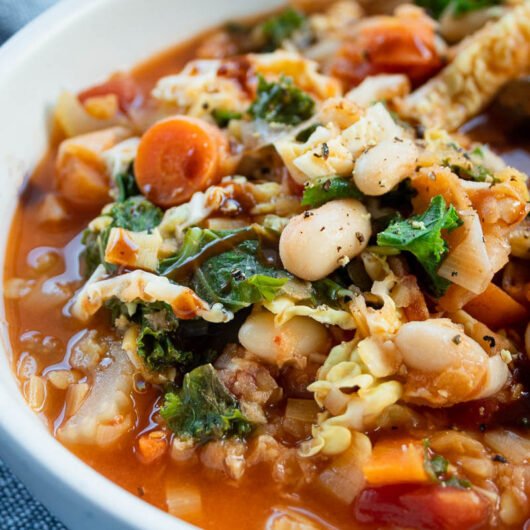
Homemade Chunky Vegetable Soup
Cooks in 40 minutesDifficulty: EasyView RecipeA super satisfying haomemade chunky vegetable soup that will give you a hearty hug on a chilly day.


indian spiced lentil soup
Cooks in 65 minutesDifficulty: Very EasyView RecipeWarm up with this hearty, vegan Indian Spice Lentil Soup! This easy recipe is perfect for meal prep and packed with plant-based protein.
These 33 whole food, plant-rich recipes show just how easy it can be to add more fibre, colour and variety to everyday meals. From hearty vegetarian mains to nourishing soups, vibrant salads and simple sides, each dish is built around minimally processed ingredients that help you create filling, balanced plates without cooking separate meals.
In our home, this way of eating has made meals more satisfying, more predictable to carb count and far better for steady energy throughout the day. It is not about changing everything overnight, but about using more vegetables, legumes, whole grains, nuts and seeds in the meals you already enjoy.
If you want a simple way to turn these ingredients into balanced, repeatable meals, the Balanced Blood Sugar Meal Builder shows you exactly how to put the plate together using the foods you already cook.

Which Recipe Will you try first?
Drop a quick comment below and let me know your favourite. Your feedback not only means the world to me, it also helps others discover and enjoy these recipes too.





Leave a Reply